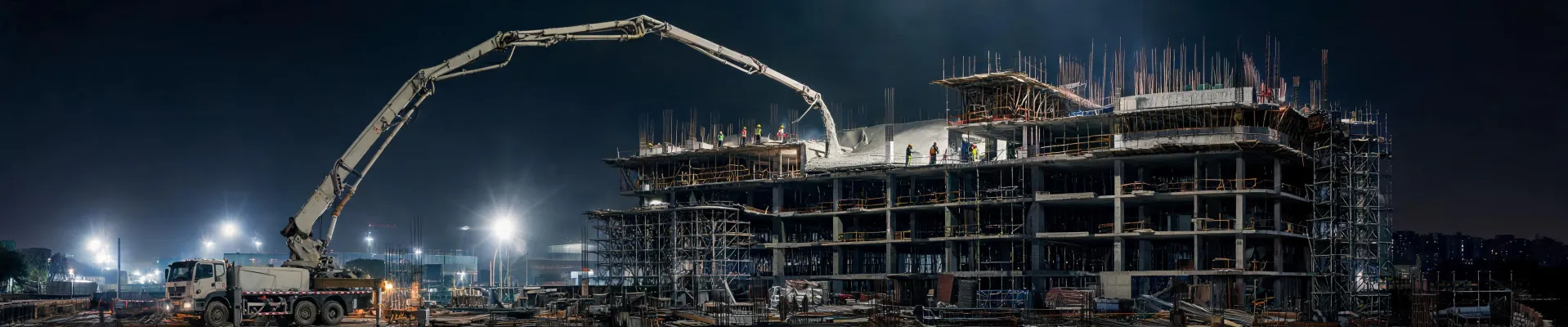
The call came in on March 4, 2024, seven minutes after our morning shift meeting started. One of our operators had spotted hydraulic oil dripping from the swing-out section of our 2012 Schwing P88. Not a slow weep—a steady leak. The rescheduled pour was already set for 6 a.m., and the only backup pump was a 31-year-old line pump that should have been retired years ago.
I'm the procurement manager at a 72-person concrete contracting company in Colorado. I've managed our equipment budget for six years, tracked every invoice in a spreadsheet that I'm slightly embarrassed to open, and negotiated with 14 different dealers. When the repair quote for the P88 came back at $44,800, my first instinct was to just fix it. The P88 had been a workhorse—or rather, it had been a workhorse until the frame crack appeared.
Why I Stopped Looking at Repair Costs
The dealer's inspection report was blunt. The main frame had cracks near the turret connection that weren't economically weldable. The boom had lost roughly 30 percent of its original wall thickness in two sections. The repair quote included a new frame, two boom sections, and a complete hydraulic hose replacement. By the time I added labor, the machine would still have a 14-year-old engine and an older rock valve design. That's not a repair; that's a lottery ticket.
So I did what I do for any decision over $50,000: I built a cost sheet. Not a price comparison. A total cost-of-ownership model that I've been refining since 2019, after a bad experience with a cheap paver. That experience produced the asphalt paver wholesale cost guide I still use today.
The TCO Sheet, Row by Row
I asked three dealers to quote the closest in-spec replacement. One of those quotes—from a regional Schwing dealer—was for a 36-meter RZ Series boom pump with 2,100 hours. The dealer listed it as a Schwing concrete pump for sale, certified, with a 24-month powertrain warranty. The other two quotes were for comparable pumps from other manufacturers, each priced noticeably lower.
At the same time, we needed to replace a 2016 mixer truck. I asked that same dealer to send a concrete mixer catalog, because they offered a concrete mixer wholesale package if we committed to a pump. The catalog was a 214-page PDF. I printed only the spec pages for three models and taped them to my home office wall. It made the comparison easier.
The Cheaper Pump
I want to say the lowest quote was $312,000, but don't quote me on that exact figure. What I remember clearly is how my stomach did a little flip when I opened the email. It was about $77,000 below the Schwing. $77,000 is a lot of money. It's a down payment on a mixer truck. It's six months of a mechanic's salary. It's hard to ignore.
But then I loaded the quote into my spreadsheet and added the line items that were missing. Freight, dealer prep, commissioning, and a full initial set of filters and hoses. The gap dropped to $54,000. Then I read the warranty exclusions. The other pump's warranty did not cover the hydraulic pumps or the swashplates. The dealer offered a lifetime maintenance package that looked good until I saw the deductible. That alone added an estimated $6,200 in parts over the first two years, based on our own P88's history. The gap was now $47,800.
The Hidden Cost of Parts Availability
People think expensive vendors deliver better quality. Actually, the causation runs the other way. Schwing can charge more because the parts network and documented service history earn it. The price premium is a result of the support, not a tax on the logo. I'm not saying cheaper pumps can't be reliable. I'm saying I need to be able to get a rock valve seal in three days, not three weeks.
I asked the Schwing dealer for their published parts book for the P88 and the 36-meter RZ. It was a 1,300-page PDF with exploded diagrams and part numbers for every seal, valve, and sensor. That kind of documentation is worth something. It means my mechanic can order the exact gasket before the machine is even torn down. The other dealer sent a price list, not a parts book. It covered about 300 common parts. Not nothing, but not enough for me to trust a 2,100-hour machine with after-hours emergency service.
Maintenance Logs and a Number I Still Think About
I don't have hard data on the other manufacturer's defect rate across the industry. I can tell you what one independent maintenance shop in our region shared with me when I called for a reference: over a two-year period, they'd logged 11 visits for the same model family in our area. Seven were routine service; four were electrical or sensor issues. That's a small sample. But four out of 11 is not a feeling.
My experience is based on roughly 50 equipment purchases over six years, mostly concrete pumps, mixers, and one paver. If you're buying one machine and planning to sell it before the warranty ends, your math could be different. For a long-term fleet asset, I'm comfortable with the tradeoff.
The Hesitation, The Wait, and What Actually Happened
Even after the numbers pointed to the Schwing, I had moments of doubt. The low quote was still $38,000 cheaper after adjustments. Every time I opened the spreadsheet, I re-checked the assumptions. My gut said stick with the Schwing. The data said stick with the Schwing. That's rare—usually one of them is pushing the other way.
We signed the order on April 3, 2024. The pump was supposed to arrive in late May. It arrived on June 11—or rather, it arrived on June 11 because the dealer found a hairline crack in the lower boom section during final inspection and replaced it before delivery. That delay cost us two rental weeks, roughly $7,200. It also told me exactly why I had picked the dealer in the first place: they inspect the machine before you get it, not after.
The First 120 Days
As of late July, the pump has 412 hours on it. The first 412 hours have been boring, which is the best thing I can say about a concrete pump. It has placed 4,100 cubic yards without a single unscheduled stop. I know that because our dispatch log tracks every pour. The concrete mixer wholesale package that came with the deal also arrived without issue—same catalog specs, same lead times, no surprises. The concrete mixer catalog from March still sits on my wall, mostly as a reminder to compare details before prices.
The asphalt paver wholesale cost guide I built in 2022 did more than save us $21,000 on a paver. It gave me a reusable framework. Every time I skip a column in that guide, I later find a reason I shouldn't have. That's not luck. It's the checklist-is-the-cheapest-insurance lesson, repeated across assets.
What I'd Do Differently
I'd ask for the maintenance logs earlier. I made the first call to the independent shop on March 18, two weeks after I should have. I'd also have asked all three dealers for their full warranty exclusions on day one, not after I'd fallen into the price gap. Reading exclusions on page 14 of a 40-page contract is not a fun Saturday afternoon.
But would I change the decision? No. In our case, the Schwing concrete pump for sale was the highest-priced quote and the lowest total cost. That doesn't mean it's the right choice for everyone. If you have your own mechanic shop, a short keeping period, or a different risk tolerance, the math can flip. Run the TCO columns before you let the price gap make the decision for you.