-
1. What does a Schwing concrete pump actually cost?
-
2. Why are Schwing concrete pump parts so expensive?
-
3. Do I really need a Schwing rock valve, or is it marketing?
-
4. Will you take a small order? I only need one or two units.
-
5. What should I look for when sourcing asphalt paver OEM equipment?
-
6. What does a real rush order cost?
-
7. Is "wholesale" pricing on concrete pumps real?
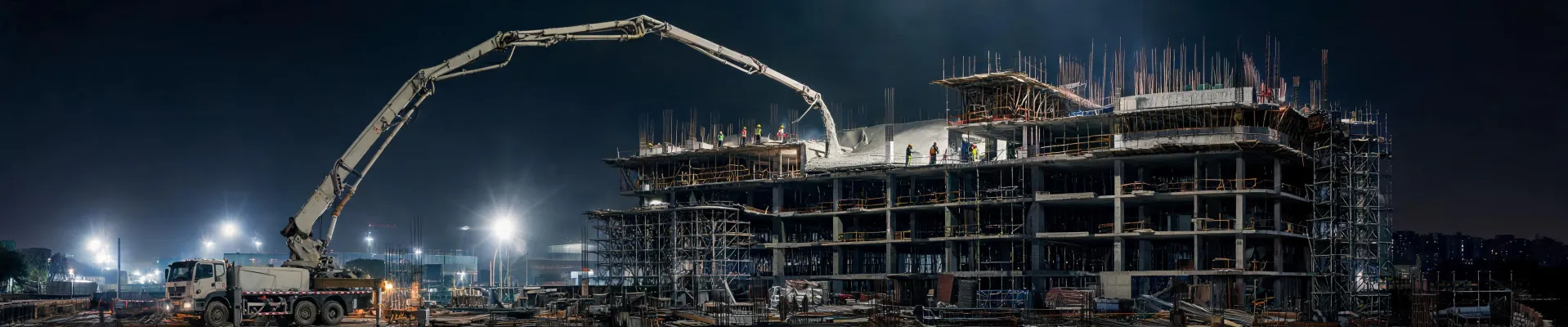
Last month a contractor called me at 4:40 on a Friday afternoon. His Schwing boom pump had blown a rock valve housing mid-pour, and he needed to be running again by Monday morning or he'd miss a slab pour on a $340,000 job. We found the part in a partner dealer's stock, paid about $600 extra in expedited freight, and had him back online by Sunday night. That's a normal afternoon for me.
I work on the trading side of construction equipment—mostly concrete pumps and asphalt pavers—where I handle rush orders, sourcing requests, and parts inquiries all day. Below are the seven questions that land in my inbox most often. No fluff, no marketing voice.
1. What does a Schwing concrete pump actually cost?
Depends entirely on the class. Rough bands from what I see in dealer listings and auction results as of early 2025:
- Truck-mounted boom pumps (36m class, used): $140,000–$260,000 depending on hours, boom history, and whether the outrigger system has been serviced.
- Line pumps / trailer pumps (used): $35,000–$90,000. A clean P88 or similar truck-mounted unit can push past $120,000.
- New OEM units: pricing is quote-based and swings hard by region and dealer. Don't trust any single number you see online.
(Prices are for general reference based on public dealer listings, Q1 2025; verify current rates—used equipment pricing moves weekly.)
One thing people miss: the sticker is maybe 60% of your real cost. Transport, boom inspection, and a proper hydraulic flush on arrival can add $8,000–$20,000 before the machine ever pours concrete.
2. Why are Schwing concrete pump parts so expensive?
From the outside, it looks like OEM parts pricing is just a brand tax. The reality is more technical than that. Rock valve components, wear plates, and delivery pistons are built to tolerances that aftermarket suppliers can't always match—and when they miss, the failure mode is catastrophic, not cosmetic.
That said, I'm not going to pretend every part has to be OEM. Wear items like rubber hoses and clamp gaskets? Aftermarket is fine if the spec matches. Wear plates, rock valve housings, and hydraulic control blocks? I've watched customers try to save $1,800 on a non-OEM rock valve and lose a $6,000 pour schedule two weeks later. Twice now.
“When I first started sourcing pump parts, I assumed the cheapest quote was always the smart buy. Three service callbacks later, I learned that on critical-path components, the cheapest quote is often the most expensive decision.”
3. Do I really need a Schwing rock valve, or is it marketing?
The rock valve isn't marketing. It's a fundamentally different valve design—it handles harsh mixes and high-pressure lines better than most flapper-style alternatives, especially on long horizontal pushes. If you're pumping 60+ meters laterally or working with high-slump or fiber-reinforced mixes, the difference is measurable. If you're doing short pours with standard mixes, you may never notice it, and paying the premium doesn't make sense.
I should add: the valve itself is only half of it. Whether it performs depends on how well the wear ring and housing are maintained. A neglected rock valve in a well-known brand will underperform a clean unit every time.
4. Will you take a small order? I only need one or two units.
Yes. And I'll say this plainly: the vendors who blew off my $400 parts orders back when I was a junior buyer are the same ones I don't call now that I place six-figure equipment orders.
For asphalt paver sourcing, I've seen buyers start with a single used unit to test a brand, then scale to a fleet. For concrete pump parts, a first order is often one wear plate and a gasket set. That's fine. Small doesn't mean unimportant—it means potential.
What I will say honestly: small volume means you can't always get the same unit price as a 20-unit order. Anyone who tells you otherwise is either lying or hiding the cost somewhere else. That's just arithmetic, not discrimination.
5. What should I look for when sourcing asphalt paver OEM equipment?
Three things, in this order:
- Screed condition. Screeds are where paver costs hide. A worn screed plate assembly can run $15,000–$40,000 to replace or rebuild. Ask for thickness measurements, not photos.
- OEM vs. rebranded. Plenty of machines carry a European-sounding nameplate but are assembled elsewhere with mixed components. Nothing wrong with that—but the pricing should reflect it, and the parts book should match the actual machine.
- Parts availability. A paver is only as good as its parts pipeline. If you can't source a feed sensor in under a week, you don't have a paver—you have a lawn ornament.
Ask specifically for the OEM documentation package. If the seller can't produce it, walk. Not because the machine is bad—because you won't be able to verify what you're buying.
6. What does a real rush order cost?
Rush premiums on equipment parts typically land in these bands (based on 2024–2025 freight and supplier fee structures):
- Standard air freight to expedite a part: +$300–$1,200 over ground
- Next-day parts sourcing from a partner dealer: +15–30% over standard price
- Same-day dispatch with courier: +50–100%—rarely worth it unless the pour schedule is at risk
The math I use: if the delay costs more than 3× the rush premium, take the rush. If it doesn't, wait. I've watched clients pay $900 in rush fees to save a $40,000 contractual penalty. I've also watched one pay $700 in rush fees on a part that sat in his yard for three weeks because his crew got rescheduled anyway. The second one still stings.
7. Is "wholesale" pricing on concrete pumps real?
Sometimes. Here's the honest threshold: true wholesale pricing on concrete pumps usually starts around 5–10 units per year with a single dealer, or as part of a service agreement. Below that, you're generally looking at retail-minus-a-courtesy-discount, and that's fine.
What I'd push back on is any supplier who promises "wholesale pricing" without asking about your volume, service history, or region. That's a red flag, not an offer. Real wholesale conversations involve a real conversation.
If you're placing your first order—whether it's one rock valve or one used boom pump—expect fair retail, ask clear questions, and build the relationship. That's how the pricing actually improves over time. Prices as of Q1 2025; verify current rates with your dealer.