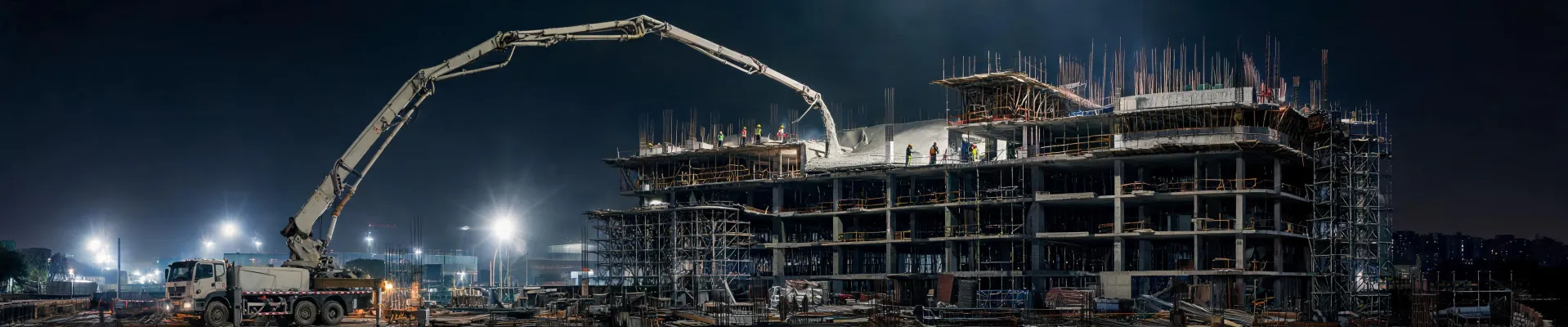
If you're searching for a Schwing concrete pump for sale, you already know the hard part isn't finding a machine—it's choosing one. The market is full of authorized dealer stock, factory-direct quotes, private-label alternatives, and used units with unknown history. There is no universal answer. After eight years as a procurement manager for a mid-sized construction equipment distributor, with roughly $1.8M a year in equipment spending, I can tell you that the badge on the frame matters less than the operating plan behind it.
We took delivery of our first line pump in 2018—no, 2019, I'm mixing it up with the concrete mixer—and the way we evaluate purchases has changed a lot since then. This is how I'd break down the concrete pump OEM vs private label decision if I were advising myself five years ago.
The Upfront Price Is the Most Expensive Illusion
From the outside, a private-label pump at $180,000 looks like a steal next to a Schwing at $320,000. The reality is you're not buying a machine; you're buying an operating cost curve. It's tempting to think that this is a brand debate, but it's actually a decision about how much downtime you can tolerate and how soon you plan to sell the machine.
Price is a number. Cost is a curve.
In 2023, I ran a side-by-side comparison of five quotes for a 36-meter boom pump. I almost went with a factory-direct unit that undercut the Schwing dealer by 42%. Then I added wear parts, dealer callout time, projected resale, and the cost of a missed pour. The five-year total cost gap dropped to about 12%. I'd have to pull the old spreadsheet to give you the exact figure, but the lesson stuck.
When we compare equipment now, we use a simple total cost list:
- Purchase price and financing
- Wear parts and service intervals
- Downtime and schedule risk
- Resale value or trade-in allowance
That last line is where the OEM premium usually gets clawed back.
Three Scenarios, Not One Debate
The right choice depends on which of these three buckets you're in. I've used this classification on every concrete pump and mixer sourcing project I've touched in the past five years.
Scenario A: High Utilization, Long Hold, In-House Mechanics
This is the classic case for a Schwing concrete pump. If the machine is running 1,500 hours a year, you plan to keep it for seven or more years, and your shop can do routine service, the OEM premium is a rational investment.
According to Schwing America's product pages (schwing.com, accessed January 2025), the Rock Valve is a core component of their concrete pumps—designed for high-density concrete in demanding placements. I'm not a hydraulic engineer, so I can't speak to valve design tradeoffs. What I can tell you from a procurement perspective is that in our records, Schwing pumps have held their resale value noticeably better than the private-label units we've accepted as trade-ins. If I remember correctly, a 2019 boom pump with 8,000 hours retained about 55% of its original value—but don't quote me on the exact number.
In this scenario, buy from an authorized Schwing dealer, not from a broker. The dealer is your parts pipeline and warranty safety net. Negotiate extended warranty and a scheduled maintenance plan as part of the deal. Our procurement policy now requires a five-line TCO template for any machine above $150,000, and this is the scenario where the template almost always points to OEM.
Scenario B: Low Hours, Limited Capital, or First Pump
If you're a small contractor doing foundation pours, repair work, or occasional rental jobs, the pump might sit idle for weeks. A fully loaded new Schwing can be overcapitalized. That's not an insult—it's math. At under 800 hours a year, the ownership cost per hour of utilization is brutal.
This is the scenario where a new private-label pump can make genuine financial sense. To be fair, private-label factories have improved substantially. The good ones build to international tolerances, provide detailed manuals, and offer real warranties. The bad ones are cheap for a reason, so your spec sheet and factory audit are what separate the two.
The counterintuitive part: a new private-label pump can be less risky than a used Schwing with an unknown history.
A used Schwing from a non-dealer source may have no warranty, no service records, and a wear status you can only guess at. A new private-label unit, carefully specified, brings a fresh warranty and a support contract that starts on day one. That can be the smarter cash-flow choice for a small buyer.
I'm especially sensitive to this because I started as a small buyer. When I placed our first order, we were a three-person operation. Four of the six dealers I called didn't return my messages. The one who spent 45 minutes explaining boom versus line pump requirements got our first order—and we've ordered from them every year since. Good vendors understand that small doesn't mean unimportant; it means potential.
Scenario C: You're Sourcing Concrete Mixers as a Product Line
If you're a distributor, rental company, or equipment importer, the question changes. You're not buying one machine for your own fleet; you're building a product line. This is where concrete mixer OEM and concrete mixer sourcing terms get used every day.
With a brand OEM like Schwing, the factory's engineering, testing, and reputation are part of the product. With private-label, the factory builds to your spec and puts your name on the product—so the commercial risk sits with you. Both can work, but private label puts the responsibility for the product's reputation squarely on you.
I'm not a logistics or legal expert, so I can't speak to import compliance or tractor certification requirements. What I can tell you from a procurement perspective is that vague specs are the #1 reason private-label sourcing projects fail.
- Specify the gearbox, hydraulic pump, and control system brand—not just "quality components."
- Require a third-party inspection before shipment.
- Negotiate a critical spare parts package as part of the order, even if it's only 2–3% of total value.
- Put after-sales response time, parts lead time, and warranty terms in writing.
In that context, the concrete pump OEM vs private label debate is not about which badge is more prestigious. It's about which side carries the engineering risk and which side carries the commercial risk.
How to Tell Which Scenario You're In
If you're still on the fence, answer these four questions. Be honest—this is the same exercise I use for our annual budget review.
- How many hours per year will the machine run? Over 1,500 hours, lean OEM. Under 800 hours, private label should get a real look.
- Do you have in-house service capability? If yes, a less common machine is less scary. If no, dealer network matters more than sticker price.
- When do you plan to sell? If within three years, resale value matters more than acquisition price.
- What does one unscheduled breakdown cost you? Include the missed pour, rework, and client confidence. That number tells you how much downtime is worth avoiding.
The Schwing concrete pump for sale listing you're comparing to a private-label quote isn't the real comparison. The real comparison is between your operating plan and the support system behind each machine. Buy a Schwing OEM when utilization and holding period justify it. Buy private-label when your utilization is lower and your dealer relationship is solid. And if someone tells you there's only one logical choice, ask to see their cost tracking spreadsheet—they probably don't have one.