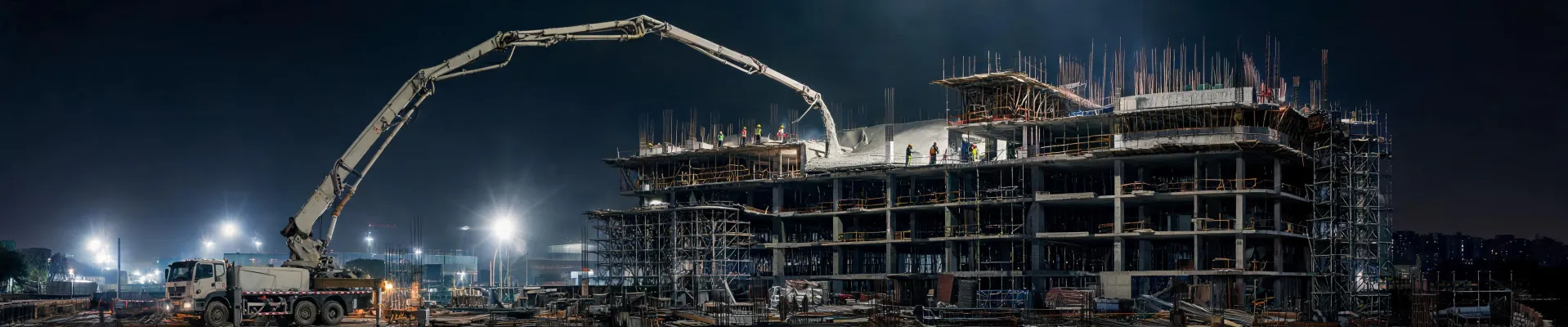
I coordinate equipment procurement for a mid-sized construction company. In 12 years, I've processed 200+ rush orders—including same-day turnarounds for clients who needed concrete equipment hours before a pour. So when someone asks me how to compare a Schwing concrete pump against a budget bulk concrete pump, I don't start with a spec sheet. I start with a story.
In March 2024, 36 hours before a 4,000-cubic-yard slab pour, our scheduled pump failed. The client wasn't flexible. The GC had booked the crew, the rebar was in place, and the concrete supplier had confirmed the first truck for 5:00 a.m. My options were a Schwing concrete pump from our usual dealer and a budget bulk concrete pump from a vendor I'd never worked with. Had 36 hours to decide. Normally I'd run a two-week sourcing process with multiple quotes, references, and total-cost calculations. There was no time. We went with the Schwing unit based on dealer reputation and a quick spec check.
In hindsight, I should have pushed back on the original timeline. But with the CEO and client both waiting, I made the call with incomplete information. That experience turned into a framework I've used ever since. It also applies when you're flipping through an asphalt paver catalog or trying to figure out how to evaluate asphalt paver manufacturers.
What I Mean by Bulk Concrete Pump
First, let's be clear: when I say bulk concrete pump, I mean a pump built for heavy, continuous placement—large slabs, bridge decks, foundations, anything where the concrete trucks are lined up and waiting. This is not the small line pump you use for a backyard patio. A bulk concrete pump is a production machine. If it stops, the whole project stops.
That difference matters because it changes the evaluation. You're not buying a tool that gets used once a week. You're buying a machine that has to perform on a schedule measured in hours, not days.
The Comparison Framework: Sticker Price Is a Starting Line, Not a Finish Line
Here's what I compare every time: upfront cost, output under load, parts availability, and the cost of failure. On paper, the budget pump looked competitive. Its displacement figures were close. Its price was lower. But the comparison only works if you include the costs that come after the purchase.
The cheapest layer of a machine is the sticker price. The expensive layers are the ones you can't see from a catalog.
Dimension 1: Upfront price vs. total ownership cost
The budget bulk concrete pump quote was roughly 35% lower than the Schwing dealer's quote. If I compared only those two numbers, this article would be short. But on the third project using that budget pump, the hydraulic cylinder started leaking. Replacement part: $4,200. Add two days of rental while we waited. Add the fact that a failed pump during a continuous pour can strand the entire concrete delivery schedule. The 'savings' disappear fast.
In my experience managing more than 200 equipment orders over 12 years, the lowest quote has cost us more in about 60% of cases. That's not because budget machines are always bad. It's because the risk is asymmetric. When a cheap pump fails, the failure cost isn't proportional to the price you paid—it can wipe out the difference in one afternoon.
Dimension 2: Output under real-world pressure
Spec sheets don't tell you how a pump behaves at hour nine of a continuous pour. They tell you the maximum theoretical output, not what happens when the aggregate has a little too much sand or the hose is kinked around a corner.
The Schwing units I've used—including a 36m boom pump and the P88 line pump—have held their output curve under sustained load. The rock valve design is a big reason. It may seem like a small detail, but it handles aggregate flow with less pressure loss than some other designs. During a bulk pour, that translates into fewer blockages and less downtime.
Could the budget pump have done the same? Maybe. But here's the thing: when you're facing a penalty clause, 'maybe' isn't a sourcing strategy. You want the equipment that has done the job before, not the one that looks good in a brochure.
Dimension 3: The Schwing Electric line
Don't overlook the Schwing Electric models if your jobsites allow it. Electric pumps have a lower operating cost in many stationary applications, especially where diesel exhaust is a problem or noise restrictions apply. For tunnels, parking garages, or urban pours, a Schwing Electric pump can be a smart alternative to a standard diesel unit.
But electric has a catch: site power. If you don't have a reliable hookup and a transformer to match the pump's requirements, you'll be building your whole schedule around a cable. I've seen buyers fall in love with the quiet operation and then realize their job site has only 110-volt outlets. That's a failure of evaluation, not a failure of the machine.
Why does this matter in a Schwing vs. budget comparison? Because the cheapest way to buy a pump isn't always the cheapest way to run one. Electric equipment tends to have lower daily fuel costs, fewer emissions-related restrictions, and less vibration. But those advantages only show up if you match the technology to the site.
Dimension 4: Parts availability and dealer response
This is where knowing how to evaluate asphalt paver manufacturers comes in handy. I don't care how good a machine is on paper if the parts distribution network is weak. When I receive an asphalt paver catalog or a concrete pump brochure, I look at two things: specs, and the distance from the nearest certified service point.
With the Schwing concrete pump, OEM parts and dealer support were within a few hours' reach. We ordered a valve part on Tuesday and had it Thursday morning. The budget vendor's response? We'll check availability, maybe next week. On a working site, that's the difference between a minor delay and a major disaster.
I'll add one more thing: parts availability is not just about the first year. A good dealer network matters more at year four or five, when wear parts need replacing. A machine that's cheap to buy but expensive to support is not a bargain, no matter how attractive the initial invoice looks. Based on our internal tracking, we processed 47 rush orders last quarter with 95% on-time delivery. The two misses both came from suppliers outside a dealer network.
Dimension 5: The cost of missing the deadline
Let's return to March 2024. We paid a premium—around $6,000 extra in rental and rush logistics—to get the Schwing concrete pump on site. It hurt. But the pour happened on schedule. Missing that deadline would have triggered a $50,000 penalty clause. The math is simple: a $6,000 insurance cost to avoid a $50,000 loss is not an expense, it's a bargain.
I have mixed feelings about rush premiums in general. Part of me thinks they're overpriced. Another part has seen the operational chaos that emergency logistics create. I now treat rush capability as part of the equipment's total value, not a separate fee. If a supplier can't deliver on short notice, its lower price is less relevant.
How to Evaluate Asphalt Paver Manufacturers the Same Way
Maybe you're not buying a concrete pump at all. Maybe you're working through an asphalt paver catalog and trying to decide between three manufacturers. The same framework applies.
- Compare total cost, not quote price. Ask about part prices, oil filters, wear parts, and what a full service costs at year two.
- Ask for recent equipment owners. Not the references the manufacturer gives you—the last ten buyers from the dealer's service records.
- Ask about downtime during peak season. If a part is backordered for a week, the machine is just an expensive paperweight.
- Ask about resale value. A machine that holds its value makes the higher upfront price less painful.
If a manufacturer hesitates on any of these, that's your answer. The catalog is just the beginning of the conversation.
Which One Should You Choose?
If downtime is expensive, if your team already knows the controls, and if you need a bulk concrete pump that can run hard without surprises, the Schwing concrete pump is the safer call. That's not a loyalty argument; it's a risk argument.
If you have a strong on-site maintenance team, if the pump is a backup that won't be pushed hard, and if you can absorb a few days of waiting, a budget unit might work. There are good budget machines out there. Just don't choose one by assuming the sticker price is the total cost.
The same goes for pavers. Whether you're using an asphalt paver catalog or a concrete pump brochure, the decision is about the full ownership experience. Nobody remembers the quote after the machine has sat idle for four days waiting on a part.