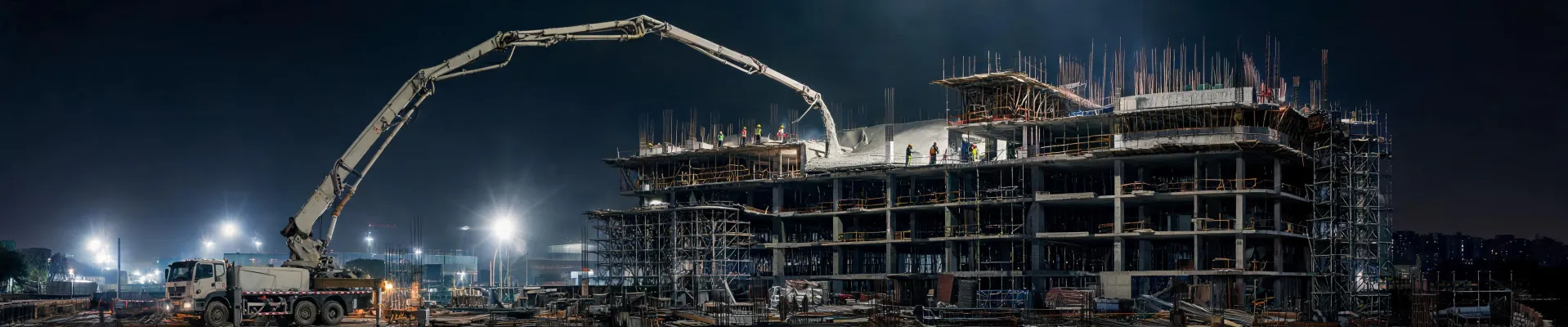
The most important thing when sourcing a Schwing concrete pump isn't the sticker price—it's whether the supplier can hand you the correct parts book and verify the model against your mix design. I've seen too many buyers chase a low quote on a used Schwing concrete pump, only to lose weeks waiting for a rock valve that doesn't fit. In my role coordinating emergency orders for a construction equipment distributor, I've handled 200+ rush orders—or rather, closer to 180 if I check the system—in eight years. Last quarter alone, we processed 47 rush orders with 95% on-time delivery. The pattern is always the same: the cheapest supplier is rarely the one who saves you when a pump goes down.
The $50,000 Lesson That Changed How I Source Schwing Pumps
In March 2024, a client called at 4 PM on a Friday needing a replacement hydraulic cylinder for a 36m boom pump. Normal turnaround: 5–7 business days. Their pour was scheduled for Monday morning. Missing it meant a $50,000 penalty clause. We found a dealer with the part in stock, paid $800 in rush shipping, and delivered by Sunday noon. The client's alternative was canceling the pour and eating the penalty.
When I first started sourcing parts for Schwing concrete pumps, I assumed the lowest quote was always the best choice. Three budget overruns later, I learned about total cost of ownership. The trigger event was a $3,000 order that came back completely wrong because the supplier didn't check the serial number range. We paid $800 extra in rush fees to fix it, but saved the $12,000 project. That's when we implemented our 'verify first, pay second' policy.
5 minutes of verification beats 5 days of correction.
What to Look for in a Concrete Pump Supplier
If you're searching for Schwing concrete pumps for sale, whether new or used, here's the checklist I use after six years of trial and error. It's not glamorous, but it works.
1. Demand the official concrete pump catalog
Ask for the Schwing concrete pump catalog—not a generic PDF. The official parts book lists serial-number-specific components for the 36m and P88 models. Per Schwing's 2024 parts catalog, the rock valve assembly differs by production year. I've seen 'compatible' parts fail because they were spec'd for a different model year. (Note to self: always cross-check the serial number before ordering.)
2. Verify the dealer network
A supplier who isn't an authorized Schwing dealer might still sell you a pump, but they won't have the technical bulletins or warranty support. I usually check the dealer locator on Schwing's official site as of December 2024. If they're not listed, proceed with caution—or at least ask for references from other contractors.
3. Match the model to your mix design
Before you buy a Schwing concrete pump, verify the boom length, pump kit, and valve type. The 36m and P88 models have different plumbing. I once watched a buyer save $2,000 on a concrete mixer sourcing deal, then spend $8,000 adapting it to their existing line. That's the 'penny wise, pound foolish' trap. The cheaper option looked smart until the first pour jammed.
4. Check for parts availability—not just the pump
The most frustrating part of vendor management: the same issues recurring despite clear communication. You'd think a written parts list would prevent misunderstandings, but interpretation varies wildly. I now require every supplier to confirm three things in writing: the exact part number, the serial number range, and the lead time for a replacement. If they can't, I move on.
A Realistic Look at Costs and Trade-offs
Let's talk numbers. A used Schwing concrete pump might list for $40,000–$120,000 depending on model and condition. But the purchase price is only part of the story. Total cost of ownership includes:
- Base equipment price
- Setup and calibration fees (if any)
- Shipping and handling
- Rush fees for emergency parts
- Potential downtime costs (often $1,500–$3,000 per day)
The lowest quoted price often isn't the lowest total cost. I've learned that the hard way. Saved $80 by skipping expedited shipping once. Ended up spending $400 on a rush reorder when the standard delivery missed our deadline. Net loss: $320, plus a very unhappy client.
That said, not every purchase needs this level of scrutiny. If you're buying standard wear parts (like clamp gaskets) for a Schwing line pump, price and availability might be your main drivers. But for a Schwing concrete pump for sale—especially a boom pump or truck-mounted unit—the supplier's technical support is worth more than a 5% discount.
When the Cheapest Supplier Actually Makes Sense
I'll be honest: there are cases where the budget option works fine. If you have a dedicated maintenance team, a deep parts inventory, and flexible deadlines, you can probably absorb the risk. I've tested six different rush delivery options; here's what actually works—having a backup supplier who knows your equipment. But for most B2B buyers and distributors, the prevention-over-cure approach saves more money in the long run.
Industry standards like ACI 304.2R emphasize proper pump priming and mix design to avoid blockages. The same principle applies to supplier selection: verify before you commit. A 12-point checklist I created after my third mistake has saved us an estimated $8,000 in potential rework. It's not perfect—we've only tested it on smaller orders so far—but it's better than guessing.
The bottom line: treat the parts book and dealer verification as non-negotiable. The cheapest quote won't matter if your pump is down and the supplier can't tell you which rock valve fits. Whether you're sourcing a Schwing concrete pump, a concrete mixer, or just a replacement valve, ask for the catalog, check the serial number, and confirm the lead time. Your future self will thank you.