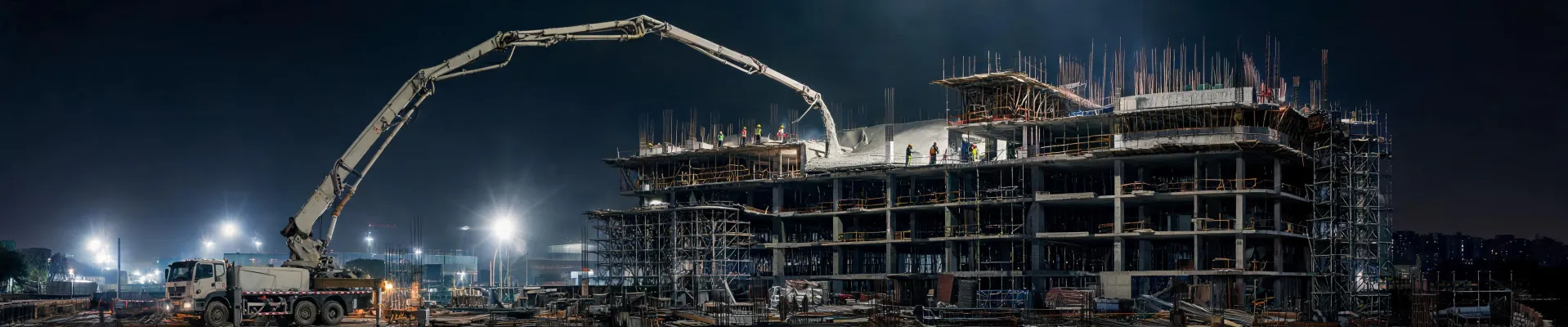
A Schwing concrete pump is a low total-cost-of-ownership purchase only when you price the support system at the same time. The same rule follows you to private-label concrete mixers and asphalt pavers. Names and labels matter, but total cost per operating hour matters more. Total cost includes parts availability, compliance paperwork, and the person who answers the phone at 6:00 a.m. when the machine stops.
I am a procurement manager at a 55-person construction equipment rental and paving company in the mid-Atlantic. I have managed our equipment acquisition budget, roughly $4.2M a year, for eight years, negotiated with more than 60 vendors, and logged every purchase in our cost tracking system. The notes below are from invoices and mistakes, not from a marketing folder.
Schwing Concrete Pump: Where the Cost Case Is Made
The argument for a Schwing concrete pump is not that it is the cheapest iron on the lot. The argument is that the rock valve, parts book, and dealer support can lower cost per cubic yard over time. On a concrete pump, the valve arrangement is what takes the abuse; Schwing's rock valve design keeps the concrete path sealed and reduces the frequency of wear-part replacement. That shows up in the maintenance ledger, not in the brochure.
Three things matter after delivery: parts availability, local service, and resale value. In that order. If you need a wear plate and the nearest generic supplier has a 10-day lead time, the $400 savings on the part becomes $12,000 in lost rental income.
Here's something I only believed after ignoring it: use the specified hydraulic filters. A dealer friend warned me to stop substituting a cheaper filter in a line pump. I didn't listen. The substitute fit perfectly, cost $330 less, and then caused a contamination alarm on a $200,000 pump. We spent $2,100 on emergency diagnosis before the machine ran again. That was a cheap lesson compared to what a rebuild would have cost, but it was unnecessary.
Electric pumps surprised me, too. The Schwing electric Farmingdale quote looked higher than the diesel unit by about $14,500 upfront. I almost wrote it off. Once I added diesel exhaust fluid, fuel delivery, sound mitigation, and the extra maintenance of a diesel engine into the spreadsheet, the electric unit came out about $13,000 lower over five years. My assumption that electric was an environmental premium was flat wrong.
Concrete Mixer Private Label: Know What You're Signing
When someone asks about the concrete mixer private label route, I try to slow the conversation down. A private-label concrete mixer can be a good business decision. But private label is not a machine category. It is a contract. The same factory that builds premium mixers may also build value-line mixers; private label only tells you whose name goes on the final product, not which quality line is underneath.
What most people don't realize is that the factory's quoted price assumes it can choose the component quality. If you do not specify the hydraulic pump, motor, controls, and drum thickness, you are paying for a price point, not for a configuration.
One mixer order taught me this. I wrote 'standard municipal spec' in the purchase order, meaning our normal road-ready configuration. The supplier interpreted it as 'minimum configuration that will pass the first inspection.' We discovered the mismatch when the brake certification and axle rating arrived. The machine did not match what we had promised a customer. Fixing it cost about $6,300 and three weeks.
Before I sign a concrete mixer private label order now, I require these pieces in the contract:
- A detailed bill of materials with make and model for the hydraulic pump, motor, and controls.
- Component-level warranty terms from the manufacturers, not only from the assembler.
- Road and chassis compliance certifications that match the actual as-built machine.
- A parts book and service manual for the exact production number, not a general manual.
None of those items are expensive to write down. Ignoring them is expensive to discover.
Asphalt Paver Compliance Requirements Are an Operating Cost
If no one on the buying team mentions asphalt paver compliance requirements before the PO, assume the machine will sit still longer than expected. I check three categories: engine certification and emissions, transport permits and lighting, and state or local registration rules.
In the US, nonroad diesel engines in asphalt pavers are covered by EPA standards under 40 CFR Part 1039. That is not a footnote; it changes the maintenance budget. A Tier 4 diesel paver usually has a diesel particulate filter and a regeneration system. If the crew lets the machine idle too much, the filter loads up, regeneration burns fuel, and the maintenance plan needs a new line item. Take this with a grain of salt because state rules vary, but the federal standard is a good starting point.
Then comes the move. A paver often reaches the site on a lowboy, so width, overhang, lights, brakes, and permits all become part of the equipment cost. And if the machine will cross state lines or be sold into California, the emissions paperwork gets much more specific than a one-page form.
I found a low-hour paver trade-in from another state. The machine ran fine; the engine serial number did not match the emission certificate. The state registration review added nine days before the paver could rent. That machine should have produced about $11,000 in that window. No one covers that cost except the owner.
When I Would Not Buy This Way
Not every decision deserves this treatment. If you need a concrete pump for one six-month job, renting is probably better than owning, no matter the brand. If you have a strong in-house hydraulic shop and you plan to scrap machines rather than resell them, a lower-cost pump may be rational. If your private-label concrete mixer stays on your own property and your own mechanics support it, the compliance list is shorter. And if your asphalt paver never leaves the county, transport rules are less relevant.
The conclusion is not 'always buy Schwing.' It is that the machine price is a beginning, not the bill. A Schwing concrete pump can earn back its premium; a private-label concrete mixer can be a good margin play; an asphalt paver can be a reliable asset. But only after you price the parts, the people, and the permits around them.