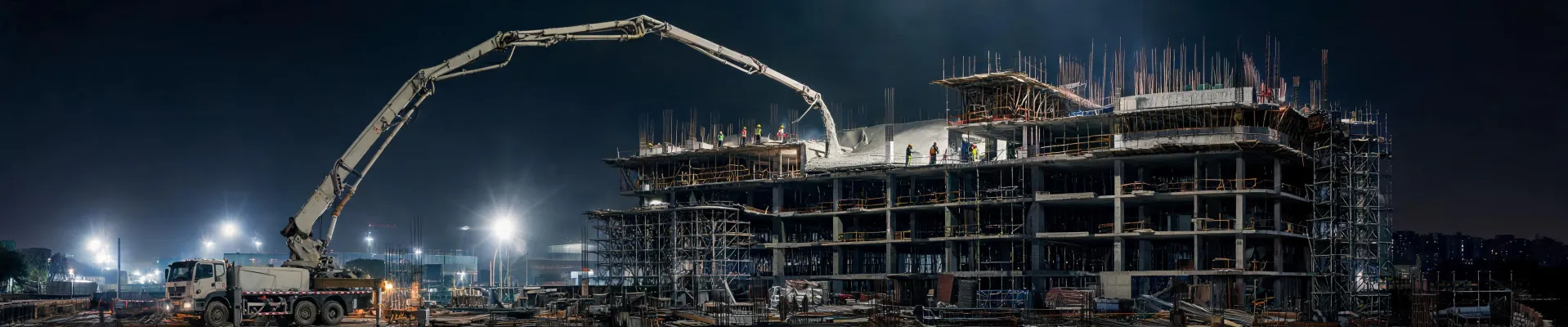
Schwing Concrete Pump Price: No Single Answer — Only Your Scenario
Search for "Schwing concrete pump price" and you'll get two types of results: outdated price sheets or "contact us for quote" forms. That's because concrete pump pricing doesn't work like a product catalog. There's the dealer margin, the configuration, the attachment set — and most importantly, why you're buying.
Here's the thing: the real cost of a Schwing boom pump, line pump, or truck-mounted unit swings wildly depending on your situation. A contractor replacing a dead machine at 4 PM on a Thursday faces a completely different economic reality than a fleet manager planning next season's expansion.
After nine years coordinating rush orders at a construction equipment dealership — including same-day turnarounds for general contractors — I've worked through all three scenarios. I've also watched buyers overpay in each one. Including myself.
So which one are you?
Scenario 1: The Emergency Replacement (Your Project Cannot Wait)
This is the one I know best. A contractor calls. A critical machine is down. The clock is ticking.
In March 2024, a client called at 4:30 PM. Their Schwing BP 3500 — the backbone of an active pour schedule — had a hydraulic failure. They needed a replacement or a qualified repair within 36 hours, or they'd lose a $180,000 concrete contract.
Normal lead time on a replacement pump: 6 to 10 weeks.
We found a used unit through our dealer network, arranged transport, paid $4,200 in premium freight, and had it on-site in 31 hours. Total cost, including the unit: $94,000.
Their alternative: defaulting on a contract with a $30,000 penalty clause and losing a client relationship worth far more than that.
The TCO calculation here is straightforward. You're paying for speed. Yes, the expedited freight is expensive. But $4,200 almost disappears when the alternative is an $180,000 miss.
I've seen procurement managers try to save money by sticking with standard channels. That hasn't worked out well in my experience. In a live pour, a week's delay means idle crews, breach penalties, and lost trust. The savings never justify the risk.
But watch out: some distributors treat "emergency" as an excuse to inflate everything. Always ask for itemized rush fees — freight, priority handling, weekend surcharges. If a dealer can't break it down, that's a red flag.
Rush pricing typically runs 15-30% above standard rates based on dealer quotes from Q1 2025. Verify current pricing directly with your distributor, as rates vary by region and availability.
Scenario 2: Planned Fleet Expansion (You Have Time and Leverage)
This is the scenario most buyers think they're in. Usually, they're not. Planned procurement means you have 6 to 12 weeks, sometimes more. You have leverage. You can compare quotes.
But it isn't always cheaper.
In Q2 2023, a client with a solid plan chose aftermarket parts to save about $8,000 upfront. Six months later, a hydraulic failure cost them more than $22,000 in repairs and downtime. That's a lesson learned the hard way.
When you're planning, the real cost isn't just the machine. It's the machine plus everything that touches it:
- Original OEM parts vs. aftermarket alternatives (one is a trap)
- Dealer support quality — who's answering the phone when something fails?
- Parts availability and turnaround
- Operator training and documentation
- Resale or trade-in value down the line
According to Schwing America (schwingamerica.com), their concrete pump range — including the S36SX and P88 models — is engineered for extended service intervals. There's a cost to that engineering. In our experience, though, it's usually lower than the alternative over the machine's full life.
Everything I'd read about buying equipment said to always go with the lowest quote. In practice, the mid-range option with strong parts support consistently delivered better TCO for our clients. The $500 you save on the initial invoice can turn into $5,000 in downtime later.
So glad I started tracking total cost of ownership before comparing quotes. Almost made the mistake of focusing only on sticker price, which would have meant recommending machines that bled money through downtime.
Scenario 3: Dealer / Wholesale Procurement (You're Buying to Resell)
If you're purchasing for resale, the logic shifts again. Your customer doesn't care what you paid. They care about reliability and parts availability.
This is where Schwing's distributor infrastructure matters. A strong dealer network gives you backup you can promise to your customers.
Here's what distributors typically evaluate when weighing a partnership:
- The concrete mixer catalog and pump lineup — how comprehensive is it for your market?
- Parts books and documentation — current and usable?
- Factory support — how quickly can you get answers or replacement parts?
A well-built dealer relationship makes your quote look competitive without cutting your margin. If you can tell a customer "OEM parts ship within 48 hours," they'll often accept a 5% premium over the used equipment dealer down the street. That's not speculation. It's what our order data shows.
The TCO mindset here is different but related: your procurement cost isn't the only input. Your parts inventory, your after-sales support, your response time — they all feed into the same equation.
Which Scenario Are You In?
Ask yourself three questions:
- Are you dealing with an active emergency? Machine down, project stalling, hours ticking. → Scenario 1. Speed over savings. Accept the premium, but demand itemized fees.
- Are you expanding for future work with a 2-3 month runway? → Scenario 2. Don't compare sticker prices. Compare total ownership: parts, service, downtime risk, resale.
- Are you stocking for resale and building a dealer relationship? → Scenario 3. Prioritize parts availability and documentation. That's what drives repeat customers, not per-unit margin.
There's no "best" path. But if you ignore total cost of ownership in any of these three scenarios, you'll pay more — in money, time, or relationships. The cheapest upfront quote is rarely the cheapest decision. The most expensive machine is the one that stops working when you need it most.
Bottom line: Plan for the scenario you're in, not the one you wish you were in. Your budget will thank you.