Last year, our finance director said something that made me laugh and cringe at the same time: 'Why can't Schwing just list a concrete pump price like Amazon does? It's a pump on a truck. Five models. Done.'
It sounded reasonable. And it's the same mindset that cost me about $41,000 in 2022.
Context: I've managed equipment purchasing since 2021 for a mid-sized concrete contracting and paving company. We spend roughly $2.3 million per year across twelve to fifteen vendors. I report to both operations and finance, and I sit between the people who run the machines and the people who pay for them. I'm not an engineer. I'm the person who asks boring questions at the right time.
Suppliers Sell Machines. Buyers Actually Need Reliability.
If you search for 'Schwing concrete pump price,' you won't find a clean list price. That frustrates buyers, and I understand why. But there's a structural reason: a concrete pump is configured, not just purchased. Are you comparing a 36-meter boom pump or a line pump? What output do you need? Truck-mounted or stationary? What chassis, emission standard, and delivery package does the dealer include? Those variables change the number on the invoice.
The bigger problem isn't the missing price list. The bigger problem is that we ask about price before asking what makes one quote different from another.
Here's the thing: a concrete pump is a way to convert a truckload of ready mix into a finished slab. The machine is not the whole system. The system includes the dealer who maintains it, the parts that are stocked locally, the technician who answers the phone on Friday night, and the documentation that helps your crew avoid repeating a failure.
We think we're comparing machines. We're actually comparing what happens after the machine stops working.
What the $23,000 Savings Finally Cost Us
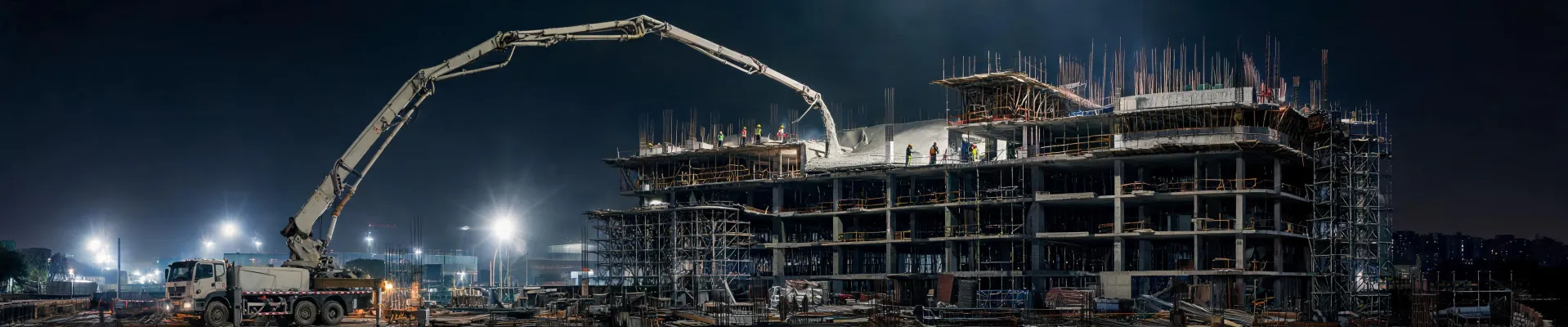
In 2022, we sourced a new truck-mounted boom pump. The supplier we trusted gave us a serious quote. A smaller vendor undercut that quote by $23,000. With materials prices climbing and margins getting squeezed, that discount got everyone's attention.
I knew I should ask for references from three owners with at least 500 operating hours on that model. I knew I should visit the vendor's parts operation and see what was actually in stock. Instead, I thought to myself: what are the odds that a brand-new machine fails in its first year?
The machine arrived. It worked well for about six weeks. Then the trouble started as an intermittent loss of pressure. Small enough to dismiss, at first.
It happened on a pour with sixty cubic yards of concrete ordered, two crews on site, and an afternoon weather window. The pump stopped at 11:20 a.m. The cause was minor—a pressure sensor and a small hydraulic valve. The problem was that nobody within 300 miles stocked those parts or had a technician who truly knew the machine.
A repair technician drove four hours the next morning. He diagnosed the fault by 11:00. The part was not in stock. The factory warehouse had one, but they only shipped twice per week. The part arrived six days later.
By the time we rented a line pump, paid for idled crews, disposed of concrete that had already been ordered, and rescheduled two other jobs, the total was just over $41,000. The $23,000 discount turned into a $41,000 bill. That's the math nobody puts on a quote.
The surprise wasn't that the pump failed. Every machine can fail. The surprise was that no one could fix it quickly. I hadn't actually bought a machine. I'd bought a slow repair process. And slow repairs have a price, too.
Private-Label Mixers and Asphalt Paver Sourcing Follow the Same Pattern
That experience changed how I look at almost every capital purchase, including equipment categories that seem totally different.
Take concrete mixer private label proposals. There is nothing automatically wrong with private-label equipment. A mixer built by an experienced original manufacturer and badged for a local distributor can be a perfectly smart purchase. The label isn't the risk. The risk is what happens after delivery. If the support network is just a phone number and a freight forwarder, the savings disappear the first time the mixer sits idle.
I apply the same logic to asphalt paver sourcing. In 2024, when we reviewed asphalt paver sourcing options, every brochure highlighted screed width, horsepower, and mat quality. Those matter. But a paver is an expensive machine that lives in one of two places: on the job, making money, or in the yard, waiting for parts. That second location is where most cost hides.
If someone asked me to write an asphalt paver distributor buying guide for their company, I'd include all the usual technical specs. Then I'd add a second section before the price comparison: how many of these machines are running in your region, what wear parts are stocked locally, and what does a normal parts request actually look like? That last question tells you more than any brochure.
Five Questions Before You Compare Numbers
Since the $41,000 mistake, I don't send out an RFQ until we've answered five service questions. It doesn't matter whether we're looking at a Schwing concrete pump price quote, a private-label mixer, or an asphalt paver.
- How many examples of this exact machine are already working in our region?
- Which parts are stocked locally, and which parts must be shipped from another country?
- What is the vendor's realistic breakdown response time?
- Is there a loaner or rental option while repairs happen?
- Who trains our operators, and is the manual matched to our specific configuration?
A checklist feels like the cheapest form of insurance, because it is. It's free. It also saves more than money. It saves the schedule that falls apart when a machine stops.
So What About Schwing Concrete Pump Price?
Today, when someone asks me what a Schwing concrete pump price should be, my answer is still: it depends. It depends on the configuration, the region, the dealer, and the support agreement behind the quote. That answer sounds evasive, but it's honest.
If a dealer talks only about the machine and never about parts stock, response times, or reference customers, then the quote isn't complete yet. Ask a Schwing dealer what parts they carry for pumps running in your area. Ask how many technicians they have. Ask how they handle a breakdown in the middle of a pour. Then compare that to the discount you're being offered.
Let me be clear: no manufacturer can promise that a machine will never break. Even a new Schwing pump can need a part sometimes. The difference is whether that part is an afternoon away or a week away. That's the real sourcing decision. The price is just the part you see first.