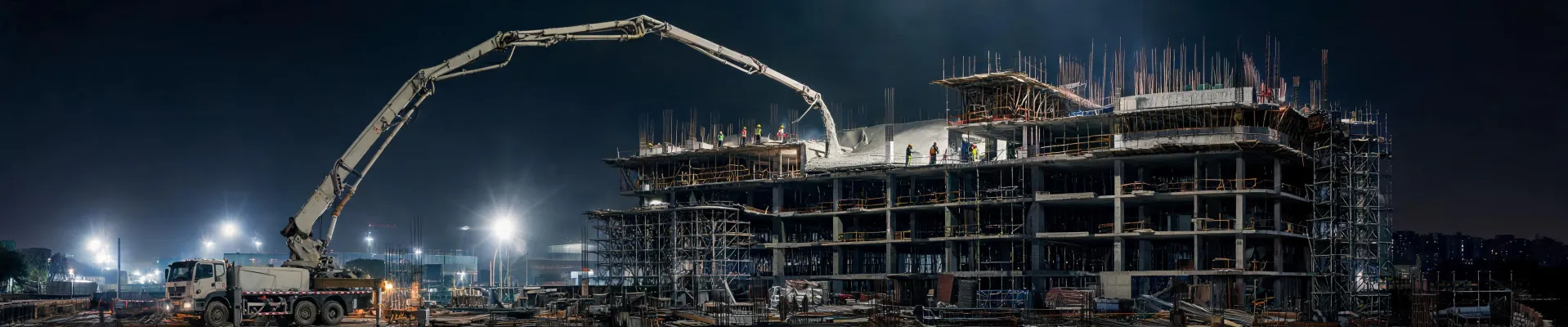
I’ve been handling concrete equipment and parts orders for 9 years. I’ve personally made—and documented—five significant mistakes, totaling roughly $63,000 in wasted budget. Now I keep our team’s pre-purchase checklist. This is not a pitch for Schwing or against any other brand. It’s a concrete pump distributor buying guide based on mistakes I’ve already paid for.
Here’s the comparison framework. Most buyers sourcing a Schwing concrete pump, a concrete mixer, or an asphalt paver end up choosing between two paths: an authorized Schwing distributor and an open wholesale or marketplace channel. I’ll compare them on four dimensions: machine verification, parts and service, total cost of ownership, and cross-category checks for concrete mixer distributor and asphalt paver wholesale purchases. My bias, honestly, is value over price. But I’ll try to be fair about when the open market makes sense.
Why I Compare These Two Paths
In 2018—my first year buying equipment—I bought a used Schwing concrete pump from a general wholesaler. The photos looked fine. The seller said it had been maintained. I checked the hour meter, approved the wire, and scheduled freight. What I did not check was the rock valve wear, the parts book, or whether a local dealer would support that serial number. The pump arrived, and within two weeks we were chasing a hydraulic issue and ordering the wrong wear parts. That mistake cost $4,800 in parts and freight plus a 12-day delay on a commercial pour. That’s when I learned that the invoice price is not the purchase price.
People think paying more causes better quality. Actually, it’s often the reverse: vendors and distributors who have documented quality, parts inventory, and service capability can charge more because they’ve earned it. The causation runs the other way. That’s a big part of why this comparison matters.
Dimension 1: Machine Verification and Specs
Authorized Schwing distributor: You can usually get serial number verification, service history, rock valve inspection, boom inspection, and the correct parts book for the model. According to Schwing’s official product materials (schwingamerica.com, accessed January 2025), models like the S 36 X, P88, and line pumps sit in a range built around concrete pumping. I’m not going to quote specs from memory—verify the model sheet. But the paperwork trail is the point.
Open market or general wholesale: You get photos, seller claims, and maybe a maintenance log. Sometimes that’s enough. Sometimes it’s not. I don’t have hard data on how often private sellers misrepresent pump hours or valve condition, but based on our five years of orders, my sense is it’s a real risk—maybe one in five listings deserves a second inspection.
My conclusion: For a late-model Schwing concrete pump, the authorized path wins on verification. For an older line pump where you have in-house mechanics, the open market can work—if you pay for an independent inspection before funds move.
Dimension 2: Parts, Service, and Dealer Network
Authorized Schwing distributor: OEM parts, trained service, and a dealer network matter most when a machine goes down. A concrete pump distributor that stocks rock valve parts, wear plates, and remote controls can cut days off downtime. That’s not glamorous, but it’s real.
Open wholesale: Aftermarket parts can be fine. I’ve used them. But compatibility has to be verified by part number, not by a listing title. In September 2022, we bought a concrete mixer through a distributor that looked solid on price. The mixer itself ran. Then a gearbox seal failed. The distributor couldn’t get the OEM seal for six weeks. We paid $2,100 in expedited freight and improvisation to keep a small pour schedule alive. The lesson was simple: a concrete mixer distributor is only as good as its parts pipeline.
To be fair, some independent distributors are excellent. They stock common parts, know the machines, and answer the phone. But you have to verify that before the purchase order, not after.
Dimension 3: Total Cost of Ownership
This is where value over price stops being a slogan and becomes math. Total cost of ownership includes purchase price, freight, commissioning, wear parts, downtime, and resale. The lowest quote often wins the meeting. It rarely wins the year.
We once saved about $600 on an aftermarket valve component. It failed early, damaged a related part, and cost $2,900 in labor and lost pour time. That $600 savings turned into a $2,900 problem. I wish I had tracked every downtime hour more carefully from the start. What I can say anecdotally is that parts delays hurt way more than the sticker difference.
From my perspective, for Schwing concrete pumps for sale, the authorized or well-supported distributor usually has the lower total cost—unless you have in-house mechanics and a spare-parts inventory. Granted, that requires more upfront work. But it saves time later.
Dimension 4: Concrete Mixer Distributor and Asphalt Paver Wholesale
The same comparison pattern applies outside concrete pumps. If you are choosing a concrete mixer distributor, ask for the parts book, gearbox model, water system spec, and drum thickness. If you are buying asphalt paver wholesale, verify screed plate dimensions, sensor compatibility, and auger wear parts. A wholesale lot can look identical in photos and still be the wrong spec.
In Q1 2024, we bought asphalt paver screed plates through a wholesale lot. The listing said they fit our model. They did not. Eighteen plates went to scrap—$3,600 wasted plus a three-day delay. Oh, and the return window had closed. That one still stings.
My conclusion: For commodity wear parts, open wholesale can be a good value if you verify specs by part number. For major components or current-model machines, the authorized distributor is usually worth the premium.
Which Path Should You Choose?
Here’s the scenario-based advice I give our own team.
- Choose an authorized Schwing distributor if: you need a late-model Schwing concrete pump, guaranteed parts support, service training, financing, or you cannot afford downtime. This is especially true for boom pumps and truck-mounted pumps.
- Choose open market or independent wholesale if: you have in-house mechanics, you can inspect the machine, you are comfortable with aftermarket parts, and the equipment is not on a critical path. Older line pumps can fit here.
- For concrete mixer distributor sourcing: favor a distributor that can show you the parts diagram and put a lead time in writing.
- For asphalt paver wholesale: treat every wear part as a spec check. Photos are not specs.
This was accurate as of Q1 2025. The used equipment market moves fast, so verify current pricing, lead times, and availability before you budget. I’m not quoting current prices here because they vary too much by model, hours, and boom length.
If you take one thing from this concrete pump distributor buying guide, make it the checklist: verify the machine, verify the parts path, and calculate total cost—not just the quote. That’s the difference between a purchase and an expensive lesson.